The Topkapı Palace Harem Explained
The Harem is the part of Topkapı most visitors rate highest, and the part most likely to be skipped by accident. Here is what it is, and how to make sure you actually get in.
 Written with Mehmet Demir, Istanbul Topkapi Palace ticket specialist

Short answer
The Harem was the private residence of the Ottoman sultan's household: his family, the women of the court, the children and the staff who served them, set behind the public palace in a maze of tiled rooms and courtyards. The key practical point is that the Harem needs a separate ticket at Topkapı. It is not covered by a standard palace ticket or the MüzeKart. The guided tour we feature includes Harem access with a licensed guide; the audio-guide ticket covers it through hosted entry, so check which kind of Harem visit you want before you book.
More visitors regret missing the Harem than any other part of Topkapı, and almost always for the same reason: they bought a ticket that did not include it and only found out afterward. So this guide does two jobs. It explains what the Harem actually was, and it makes the ticket rule impossible to miss, because that rule is the difference between seeing it and hearing about it later.
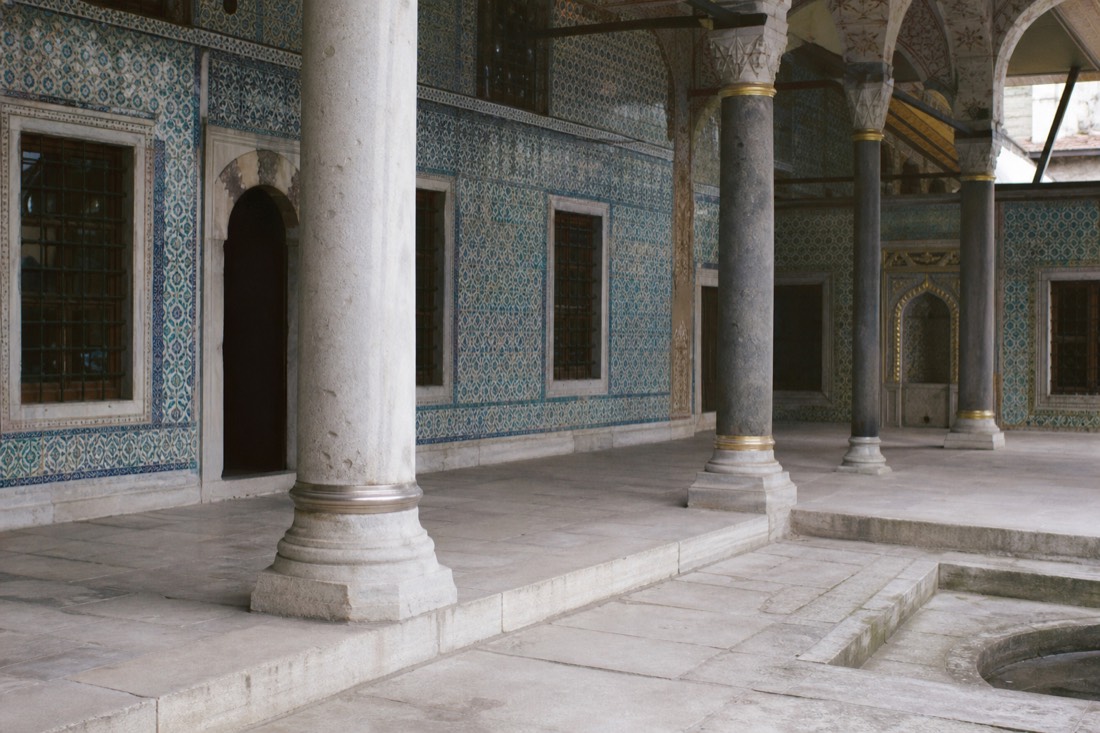
Those tiled walls are the İznik masterpieces covered in the İznik tiles of Topkapi.
What was the Topkapı Palace Harem?
The Harem was the private living quarters of the sultan's household, set apart from the public palace: the sultan's family, the women of the court, the royal children, and the staff who ran the household. The word carries a lot of myth, but at its core it was the domestic and family heart of the palace, guarded and private, where the dynasty's home life unfolded.
| The myth | The record |
|---|---|
| "Harem" means something scandalous | The word means a protected, private space |
| A single exotic hall | Hundreds of rooms, courtyards and passages, layered up over generations |
| Ruled by the sultan's whim | Run on strict hierarchy, with the Valide Sultan, his mother, at the top |
Physically it is a dense complex of hundreds of rooms, courtyards and passages, layered up over generations as different sultans added to it. You move through tiled chambers, private apartments and small courtyards, each more secluded than the last. It is the most intimate part of Topkapı, and after the grandeur of the public courtyards it feels like stepping into the household's real life rather than its ceremony; the fuller story of who actually held power inside is a read of its own.
What do you see inside the Harem?
Tiled rooms, the apartments of the sultan and the royal family, ornate chambers and a run of small connected courtyards, all richly decorated with İznik tilework. It is a visual, walk-through experience rather than a display of objects behind glass.
| Along the route | What it was |
|---|---|
| Carriage Gate | The guarded entrance where the Harem begins |
| Courtyard of the Black Eunuchs | Quarters of the guards who ran the household's daily life |
| Concubines' courtyard and bath | The working heart of the household, newly restored |
| Queen Mother's apartments | Home of the Valide Sultan, the palace's most powerful woman |
| Imperial Hall | The grand domed room where the household gathered |
| Privy Chamber of Murad III | The finest İznik-tiled room in the palace |
| Golden Road | The narrow passage the sultans walked, and your way onward |

The decoration is the draw. The Harem shows off centuries of Ottoman craftsmanship in tile, painted ceilings and carved detail, and the sense of moving deeper into a private world is what stays with people; it is a big part of why the palace as a whole earns its ticket. Because it is a maze, it is also where a licensed guide adds the most, pointing out which rooms belonged to whom and how the household was organised, context that is simply not visible on the walls. Restoration keeps adding rooms, too: in June 2024 the Concubines' Courtyard, its centuries-old bath and the Kuşhane kitchen opened to visitors for the first time after a phased restoration. Note that individual rooms in the Harem can close for conservation, so a chamber or two may be shut on your day.
Why does the Harem need a separate ticket?
At Topkapı the Harem has always been ticketed separately from the main palace, and it is also sold within the official "Combine" ticket that bundles the palace, the Harem and Hagia Irene. The MüzeKart museum pass is not valid for the Harem or for Hagia Irene, a point the official pages make clear.
This is the single most important booking fact about Topkapı. A basic palace ticket gets you the courtyards and the Treasury, but the Harem is a separate line item, so plenty of visitors walk right past it without realising they need an extra ticket. Whether you buy the official combine ticket at the palace or book a tour that bundles the Harem in, the thing to confirm before you go is simple: does my ticket actually include the Harem?
Which ticket includes the Harem?
Both featured tickets now cover Harem access: the guided tour with a licensed guide, the audio-guide ticket through hosted entry. The honest split is live narration versus self-paced exploring, and it decides how the Harem is part of your day.
| Ticket | Harem included? |
|---|---|
| Topkapi Palace & Harem Guided Tour (featured) | Yes, with a licensed guide |
| Skip-the-line ticket with audio guide | Yes, via hosted entry |
| Standard palace ticket at the gate | No, the Harem is a separate line item |
| Official "Combine" ticket | Yes, bundled with Hagia Irene |
| MüzeKart | No, not valid for the Harem or Hagia Irene |
The featured guided ticket bundles skip-the-line palace entry, the private Harem and a licensed guide with headsets, then leaves you free to keep exploring afterward. Because the guide walks you through the Harem, that maze of rooms turns from a pretty blur into an understood visit, which is exactly where a guide earns its place. The cheaper audio-guide ticket is a fine self-guided way to see the palace, and its hosted entry now covers the Harem section too, though the Harem is narrated only by the audio app; the two are compared line by line here. When in doubt, read the inclusions on the listing before you pay.
What has recently opened inside the Harem?
The Harem keeps growing as restorations finish. In June 2024 the Concubines' Courtyard, its centuries-old bath and the Kuşhane kitchen opened for the first time. In May 2026 the roughly 350-year-old Courtyard of the Imperial Consorts and Concubines opened in full, adding around twenty minutes to the standard route.
This matters for two reasons. It means the Harem you see today is larger than the one described in older guidebooks, and it means the section keeps rewarding return visits. The newly opened stretches lean toward the working, domestic side of palace life rather than the ceremonial rooms, which is exactly the part most visitors say they came to understand.
| Section | When it opened | What you see |
|---|---|---|
| Concubines' Courtyard and bath | June 2024 | One of the palace's oldest baths, with nearly 120 period artifacts shown across its cold, warm and hot rooms |
| Kuşhane kitchen | June 2024 | The small private kitchen that served the Harem, restored alongside the courtyard |
| Courtyard of the Imperial Consorts and Concubines | May 2026 | A roughly 350-year-old wing with around 750 historical objects and textiles, restored from work begun in 2020 |
| Paved Courtyard of Sultans' Wives and Female Servants | Recently restored | The everyday architecture, education spaces and social order of the palace women |
Individual rooms in the Harem can still close for conservation, so a chamber or two may be shut on your day even as others open. Treat the list above as the direction of travel rather than a fixed floor plan: the trend is more of the Harem accessible each year, not less.
The scale of what reopened in 2026 is easy to underrate. That single wing put roughly 750 historical objects and textiles back on display, from the apartments and dormitories to the laundry, kitchen, pantry and bath that kept the household running. Seeing the service rooms alongside the grand chambers is what makes the Harem read as a working home rather than a showpiece, and it is a strong argument for giving the section a full ninety minutes rather than a quick loop.
For anyone who visited Topkapı years ago, this is reason enough to return. The Concubines' Courtyard and its bath were closed to the public for generations before the 2024 reopening, and the bath alone now shows nearly 120 period artifacts across its cold, warm and hot rooms. The Harem you can walk today is simply not the Harem an older guidebook describes.
Who lived in the Harem, and how was it organised?
The Harem ran on strict hierarchy, not whim. At the top sat the Valide Sultan, the sultan's mother and the most powerful woman in the palace. Below her came the sultan's consorts, the concubines in training, the royal children, and the Black Eunuchs who guarded and administered the whole household.
The popular image of the Harem gets the power structure backwards. This was less a place of idle luxury than a tightly run institution with its own chain of command, its own schooling, and its own path to influence. Women entered at the bottom, were educated in language, music, etiquette and the Quran, and could rise through the ranks; a few reached the very top and shaped imperial politics for decades.
| Who they were | Their place in the household | Where you meet them on the route |
|---|---|---|
| Valide Sultan | The sultan's mother, ranked above all | The Queen Mother's apartments |
| Sultan's consorts | Mothers of his children, high status | The private royal apartments |
| Concubines in training | Educated and ranked, the household's workforce | The Concubines' courtyard and bath |
| Royal children | The princes and princesses of the dynasty | The private apartments and schoolrooms |
| Black Eunuchs | Guards and administrators of the Harem | The Courtyard of the Black Eunuchs |
Reading the rooms in that order is what turns the Harem from a pretty blur into a story. The route runs from the guards' quarters near the entrance, inward through the working courtyards, up to the Queen Mother's apartments and the grand Imperial Hall, and out along the Golden Road the sultans walked. Each step sits deeper inside the household than the last, which is the whole design of the place made visible.
Two roles surprise first-time visitors. The Valide Sultan, the sultan's mother, outranked everyone including his consorts, and several held real political sway for decades. The Chief Black Eunuch, meanwhile, ran the Harem's administration and controlled access to the sultan, which made a supposedly private household one of the most powerful offices in the empire. The tiled rooms make more sense once you know who commanded them.
This density of hierarchy is also why a guide pays off more in the Harem than anywhere else in the palace. The rooms rarely label who slept where or which courtyard belonged to whom, so without context the visit flattens into a run of pretty tiled walls. A licensed guide restores the map: whose apartment you are standing in, why the Black Eunuchs' courtyard sits where it does, and how a concubine could rise to Valide Sultan. That is the difference the featured guided ticket is built around.
Is the Harem worth the extra ticket and time?
For most visitors, yes. It is the section people most often name as their favourite, and it adds only about an hour to ninety minutes to the day. If your schedule is tight, or you have already seen a great deal of Ottoman interior decoration elsewhere, it is also the most defensible thing to cut.
The honest way to decide is by what pulls you. If you came for İznik tilework, painted ceilings and the sense of stepping into a private world, the Harem is the best of it and skipping it would be the real mistake. If you came mainly for the Treasury, the Sacred Relics and the courtyards, and the clock is against you, the palace still delivers without it.
| If you are | The Harem is | Why |
|---|---|---|
| A history or architecture lover | Essential | Its tilework and layout are the palace's finest, and a guide unlocks them |
| On a very tight schedule | Optional | The core palace still stands on its own without it |
| Travelling with restless children | A judgment call | Beautiful but slow, and it asks for quiet, unhurried looking |
| Returning to Istanbul later | Worth saving | New sections keep opening, so there is fresh ground each visit |
Whichever way you lean, decide before you book rather than at the gate, because the Harem is the one part you cannot add on a whim once you are inside on the wrong ticket.
Money is the other half of the decision, and the honest answer is that we do not print the figure because it moves. The Harem is either bought within the official combine ticket, which also bundles Hagia Irene, or added as its own line item, and the MüzeKart does not cover it in either case. Whichever route you take, the live price sits on the listing or the official museum page for your date, so check it there rather than trusting an older number.
What I tell visitors about the Harem ticket
The question I hear most is some version of the same worry: "I have a ticket, does it get me into the Harem?" It is the right thing to worry about, because it is the one mistake that cannot be fixed on the day.

The Harem is the part of Topkapı I most hate to see people miss, and almost every miss traces back to a ticket bought without checking the inclusions. A standard palace ticket does not cover it, and neither does the MüzeKart. Of the two featured options, the guided tour bundles it with a live guide and the audio ticket covers it through hosted entry. The Harem is either its own line item or bundled into the official combine ticket, and if your ticket does not name it, you do not have it.
So my rule with visitors is short: before you pay, find the word Harem in the inclusions. The guided tour we feature covers the Harem outright and puts a licensed guide in the rooms where the history is invisible on the walls. If you are set on the cheaper self-guided route, that is fine too: the audio ticket’s hosted entry now covers the Harem section, and the audio app carries the context.
Mehmet Demir has specialised in Topkapı Palace tickets since 2012. A lifelong Istanbul resident with deep Ottoman-history knowledge, he has helped more than 1,000 international visitors plan their way through the palace.
Frequently asked questions
Is the Harem included in a Topkapı Palace ticket?
Not in a standard palace ticket. The Harem needs a separate ticket at Topkapı, or it can be bought within the official combine ticket that bundles the palace, the Harem and Hagia Irene. The MüzeKart is not valid for the Harem.
Does the audio-guide ticket include the Harem?
Yes, with hosted entry. The current audio-guide ticket includes skip-the-line entry to the palace and the Harem section: a host walks you in, then you explore with the audio app in 25 languages. If you want the Harem explained live as you walk through it, choose the guided tour.
Is the Harem worth visiting at Topkapı?
Many visitors rate it the best part of the palace. It is the private residence of the sultan's household, a maze of tiled rooms and courtyards, and a licensed guide makes the layout and history come alive.
What was the Harem at Topkapı Palace?
It was the private living quarters of the sultan's household: his family, the women of the court, the royal children and the staff who served them, set apart from the public palace in a secluded complex of rooms and courtyards.
How long does the Harem take to visit?
Roughly one to one and a half hours on top of the main palace. Because it is a separate, self-contained section, build the extra time into your plan from the start.
Choose Your Topkapi Palace Ticket
Initial editorial recommendation. The optional choices below adjust it; the operator confirms final eligibility.
Match the ticket to your plans
Small-Group Topkapi Palace and Harem Tour with Tickets — Same guided Palace-plus-Harem walk in a deliberately small group, bookable through Viator About 3 hours.
Topkapi Palace & Harem Ticket with Audio Guide — It is the self-paced budget route that still skips the ticket queue and now covers the Harem section 20-minute hosted entry option, or a 45-minute highlights tour, then explore with the audio app.
Topkapi Palace & Harem Guided Tour with Ticket
Have a travel date in mind? It removes the sales queue and covers both the Palace and the Harem with a licensed guide. Check your date before arranging the rest of your day.
About 3 hours · Live guide in English or German; headsets provided
Meeting point, inclusions and restrictions
Ersoy Bufe kiosk, Hippodrome/Sultanahmet Square (opposite the German Fountain); guide carries a Walks In Europe sign. Two start-time options.
Includes: Skip-the-line Palace ticket, Harem entry, licensed guide, headsets; free time to keep exploring after the guided part
Good to know: Free cancellation up to 24 hours before; reserve now, pay later
Not suitable for wheelchairs or strollers; all visitors pass airport-style security; arrive 15 minutes early, timed entry