The Holy Mantle at Topkapi: The Hirka-i Saadet Explained
The Holy Mantle, or Hirka-i Saadet, is the most revered relic in Topkapi's Privy Chamber. Here is its history, how it is kept and wrapped, the Ramadan tradition around it, and how to visit with respect.
 By Mehmet Demir, Istanbul Topkapi Palace ticket specialist
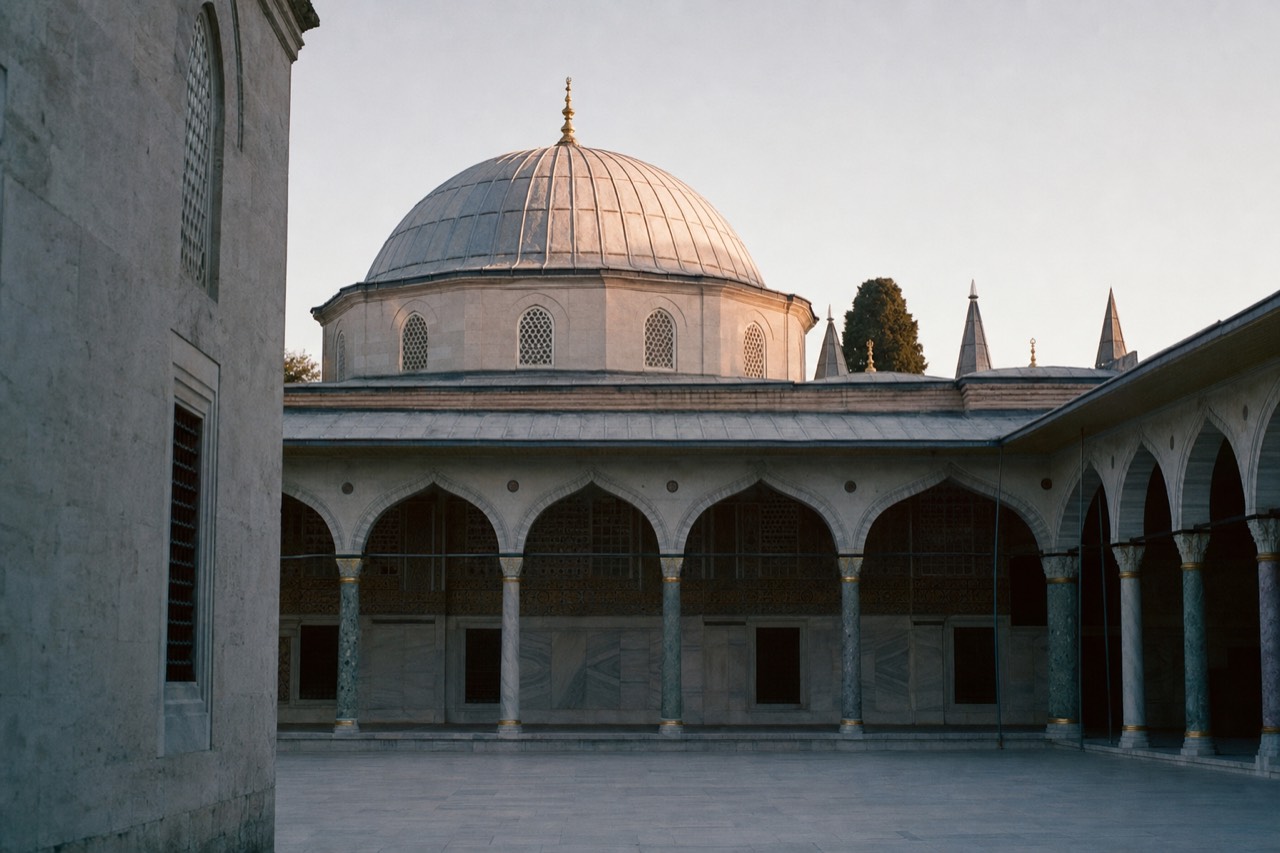
There is one room in Topkapi where nobody talks above a whisper, and where a man has recited the Quran without a break, in shifts, for centuries. That room is the Privy Chamber, the Has Oda, and the reason for the reverence is the object at its heart: the Holy Mantle, the cloak attributed to the Prophet Muhammad. It is the single most venerated thing in the palace, and visiting it asks a little more of you than the treasury does.
What is the Holy Mantle?
The Holy Mantle, in Turkish the Hirka-i Saadet, is a black wool cloak attributed to the Prophet Muhammad, kept in the Privy Chamber of Topkapi's Third Court. It was brought to Istanbul in 1517 by Sultan Selim I after the Ottoman conquest of Egypt, and has been preserved there ever since.
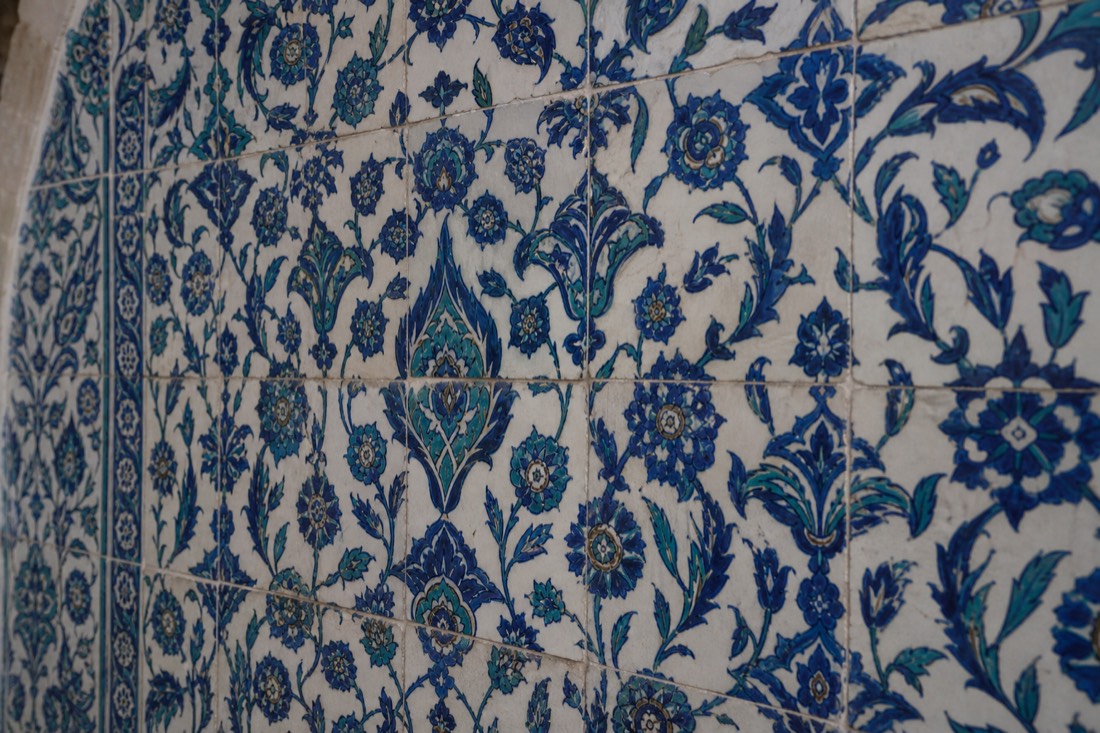
When Selim I took Cairo in 1517, the Ottoman sultan also took on the guardianship of Islam's most sacred objects, and the relics travelled north to the new imperial capital. The mantle is the centrepiece of that collection. It sits apart from the wider group of relics in its own richly protected setting, which is why I treat it as its own subject rather than folding it into the general Sacred Relics chamber overview. The chamber holds hundreds of items; the mantle is the reason the room exists.
| The mantle at a glance | Detail |
|---|---|
| Turkish name | Hirka-i Saadet |
| What it is | A black wool cloak attributed to the Prophet |
| Where | The Privy Chamber (Has Oda), Third Court |
| Arrived in Istanbul | 1517, under Sultan Selim I |
| Source | Brought from Egypt after the Ottoman conquest |
Because the context matters so much here, a guide is worth more than usual. The Topkapi Palace & Harem Guided Tour sets up what you are about to see before you reach the Third Court, and you can check live availability & prices on GetYourGuide. If you would rather self-guide, our guided versus audio-guide comparison shows what you gain and lose either way.
How is it kept and displayed?
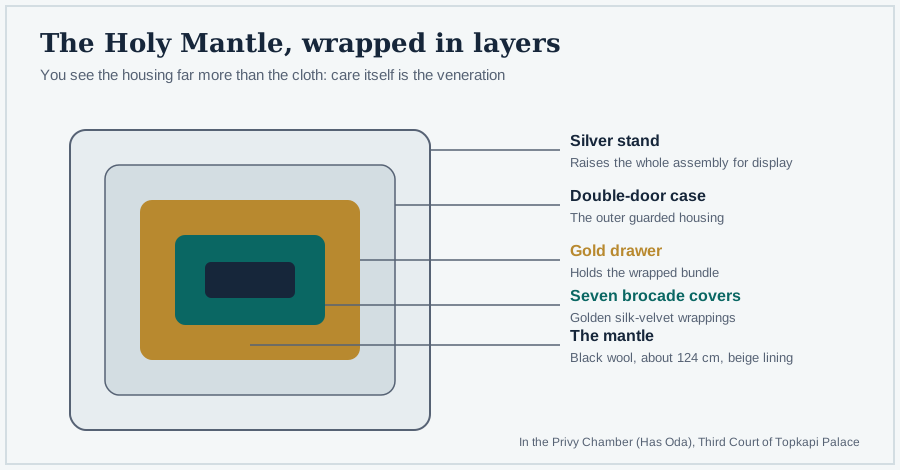
The mantle is a roughly 124-centimetre black wool garment with a beige wool lining, wrapped in seven successive golden brocade covers, held in a gold drawer inside a double-door case and shown on a silver stand. You see the setting and the wrappings far more than the cloth itself.

This is the part visitors misunderstand. The Holy Mantle is not laid out flat under a spotlight. It is protected in layers, historically unwrapped only for the highest ceremony, so what you approach is the ornate case and the gold and silver housing that guards it. That restraint is the point. The care taken with the wrapping is itself a form of veneration, and it tells you how the relic has been treated for five centuries.
| Layer | Detail |
|---|---|
| The mantle | Black wool, about 124 cm, beige wool lining |
| Wrappings | Seven golden brocade silk-velvet covers |
| Storage | A gold drawer inside a double-door case |
| Display | Raised on a silver stand |
The Ramadan tradition
The mantle has long been tied to Ramadan. Historically the sultan and his court visited it in a formal ceremony during the holy month, and today the Sacred Relics chamber is cleaned and prepared each year specifically for the surge of Ramadan visitors, under the National Palaces Directorate.
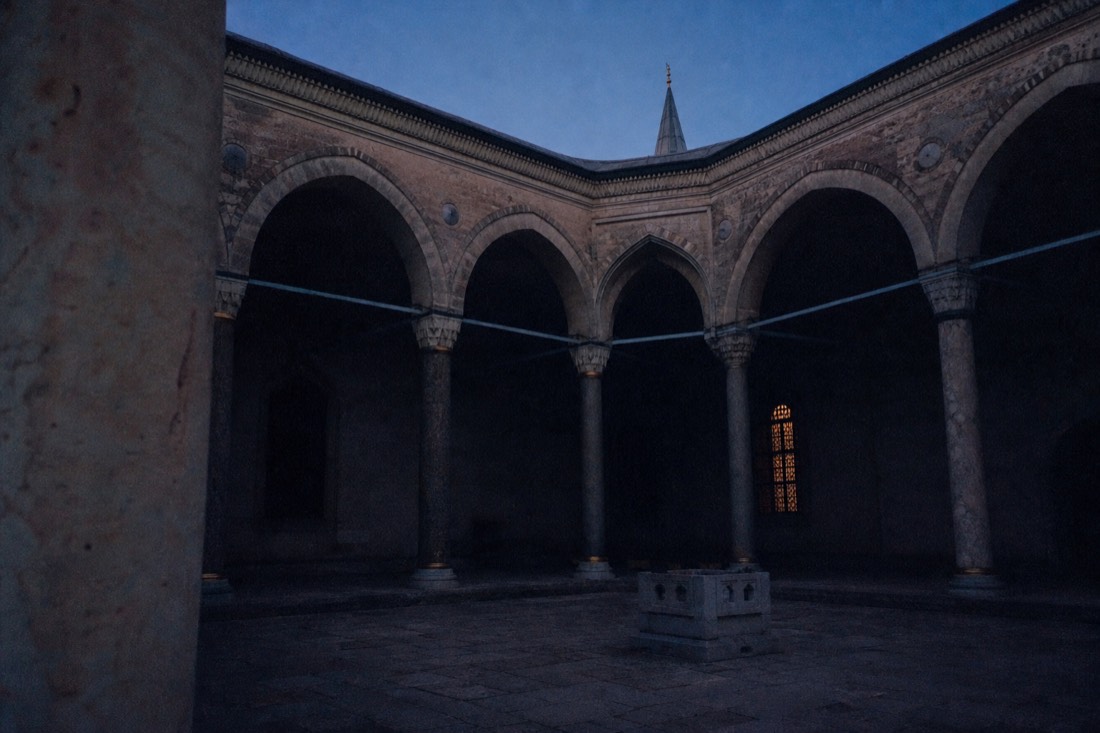
In Ottoman times, the opening of the mantle was a state occasion. The sultan led a procession to the Has Oda during Ramadan, the covers were ceremonially removed, and a piece of fine cloth pressed to the relic became a treasured keepsake. That ritual gives the room its atmosphere even now. Through the year, the tradition of continuous Quran recitation in the chamber, kept up by relay in the past, is part of why the space feels different from anywhere else in the palace. If you can time a visit for the weeks around Ramadan, you will see the relics at their most cared-for, though you will also share the room with more people.
| Then and now | Detail |
|---|---|
| Ottoman ceremony | The sultan's Ramadan procession to the Has Oda |
| The keepsake | Fine cloth pressed to the relic, then shared |
| Continuous recitation | Quran recited in the chamber, historically without pause |
| Today | Annual cleaning and preparation before Ramadan crowds |
The deeper history of these court rituals runs alongside the story of the sultans of Topkapi, whose role as guardians of the relics shaped how the whole palace was used. The dating and details above draw on the History of Istanbul reference on the Sacred Relics and reporting on the 2023 renovation and Ramadan preparations.
Visiting with respect
The Privy Chamber is a place of worship as much as a museum room. Photography is banned inside, flash is never allowed, voices stay low, and modest dress is expected even though the palace has no formal dress code. The mantle is part of the standard palace ticket route in the Third Court.
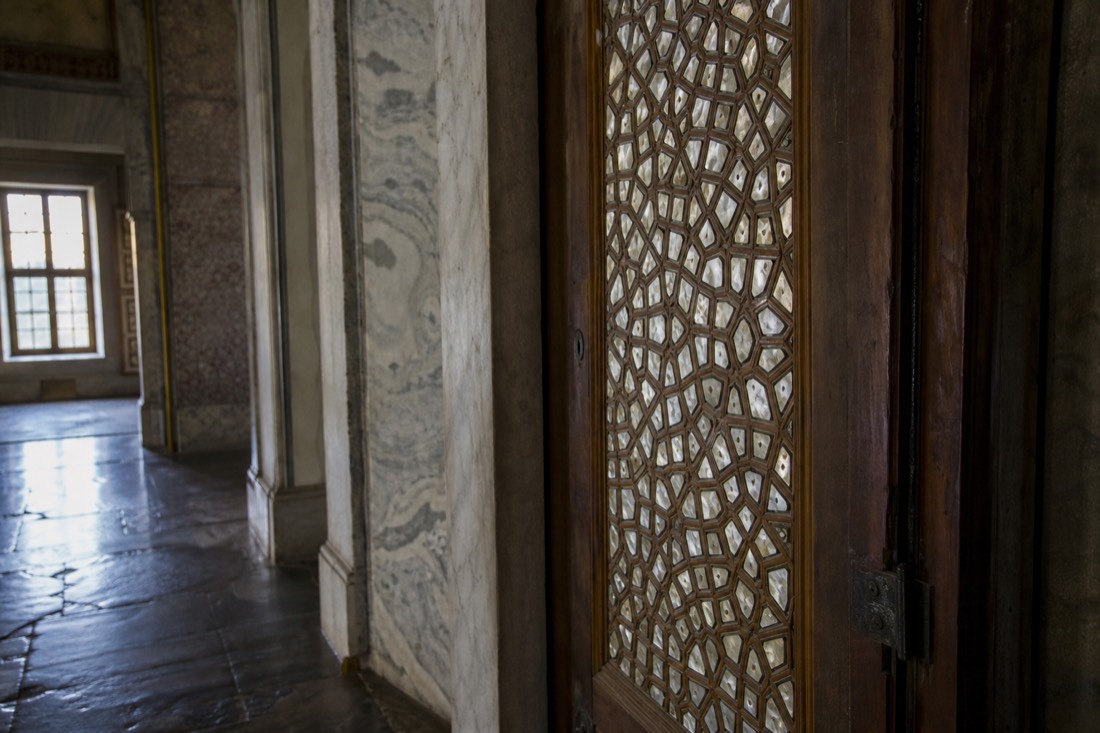
I always brief visitors before this room. You will hear the recitation, the light is low, and people are praying, so it is not the place to jostle for a view or check your phone. Cover shoulders and knees, keep your camera away, and give the queue its slow pace. Our dress-code and bag-rules guide has the practical detail, and the broader what-to-see walkthrough puts the Privy Chamber in the order of a full visit.
| Visiting point | What to do |
|---|---|
| Photography | Banned inside, no flash anywhere near the relics |
| Dress | Cover shoulders and knees, modest and quiet |
| Behaviour | Low voices, no lingering that blocks the flow |
| Ticket | Included on the standard Third Court route |
Hours shift with the season and the palace closes on Tuesdays, so confirm timing on the official National Palaces page before you plan around it. To set the Holy Mantle in the wider sweep of the old city, a small-group Sultanahmet walk connects the great monuments and is booked separately from Topkapi: you can check availability for an Old City tour here. Approach the room quietly, and it stays with you longer than anything behind glass in the treasury.